

Buy Ielts Without Exam
Add a review SeguirOverview
-
Founded Date marzo 24, 1919
-
Sectors Banking
-
Empleos Publicados 0
-
Visto 128
Descripción de la Compañía
See What Cert IELTS Tricks The Celebs Are Utilizing
Preparing for the IELTS: A Comprehensive Guide to Certification Success
The International English Language Testing System (Cert ielts) is one of the most commonly recognized and respected English language proficiency tests worldwide. Utilized by universities, immigration authorities, and employers, the IELTS accreditation acts as a valuable credential for people looking for to study, work, or reside in English-speaking countries. This detailed guide intends to offer detailed information on the IELTS, including its format, preparation methods, and regularly asked questions (FAQs).
Comprehending IELTS
The IELTS is developed to evaluate the language abilities of people who are non-native speakers of English. It is jointly managed by the British Council, IDP: IELTS Australia, and Cambridge Assessment English. There are 2 primary variations of the test:
- IELTS Academic: Suitable for people making an application for college or expert registration in English-speaking countries.
- IELTS General Training: Intended for those looking for to move to English-speaking nations or to participate in work experience or training programs.
IELTS Test Structure
The IELTS consists of four areas, each developed to test a different aspect of language proficiency:
-
Listening (30 minutes)
- This section consists of 4 tape-recorded texts, ranging from a conversation between 2 individuals to a monologue. Test takers answer questions based upon what they hear.
- There are 40 concerns in total, and the recording is played only when.
-
Reading (60 minutes)
- The Academic version includes three long texts of increasing trouble, while the General Training variation includes texts from books, publications, papers, and business handbooks.
- Test takers must respond to 40 concerns, which might consist of multiple-choice, short-answer, and summary conclusion tasks.
-
Composing (60 minutes)
- Task 1 (Academic): Test takers are asked to explain a graph, table, chart, or diagram in about 150 words.
- Task 1 (General Training): Test takers compose a letter in response to a given scenario (e.g., explaining a problem or making a request).
- Task 2: Both variations need test takers to write an essay in action to a point of view, argument, or problem. The essay must be at least 250 words.
-
Speaking (11-14 minutes)
- This section is a face-to-face interview with an inspector and is performed in 3 parts:
- Part 1: Introduction and interview (4-5 minutes).
- Part 2: Long turn (3-4 minutes), where the test taker speaks about a particular topic.
- Part 3: Discussion (4-5 minutes), where the examiner and test taker engage in a more in-depth discussion related to the subject in Part 2.
- This section is a face-to-face interview with an inspector and is performed in 3 parts:
Preparation Strategies
-
Familiarize Yourself with the Test Format
- Understanding the structure and types of questions in each section is vital. Usage official IELTS practice products to get a feel for the test.
-
Improve Your Language Skills

- Listening: Practice listening to a variety of English audio and video products, such as podcasts, news broadcasts, and lectures.
- Checking out: Read a broad range of English texts, consisting of academic posts, news short articles, and literature, to improve your reading speed and understanding.
- Composing: Practice composing essays and letters. Seek feedback from English instructors or native speakers to improve your composing abilities.
- Speaking: Engage in conversations with native English speakers or utilize language exchange apps. Record yourself speaking with recognize locations for enhancement.
-
Take Practice Tests
- Routinely taking practice tests can assist you end up being knowledgeable about the test environment and identify your strengths and weak points. Official IELTS practice tests are offered online and in test preparation books.
-
Time Management
- During the test, time management is critical. Practice finishing sections within the allocated time to prevent hurrying at the end.
-
Stay Calm and Confident
- Test anxiety can negatively affect your performance. Use relaxation methods such as deep breathing and visualization to remain calm. Confidence in your language abilities is crucial to success.
Scoring and Band Descriptors
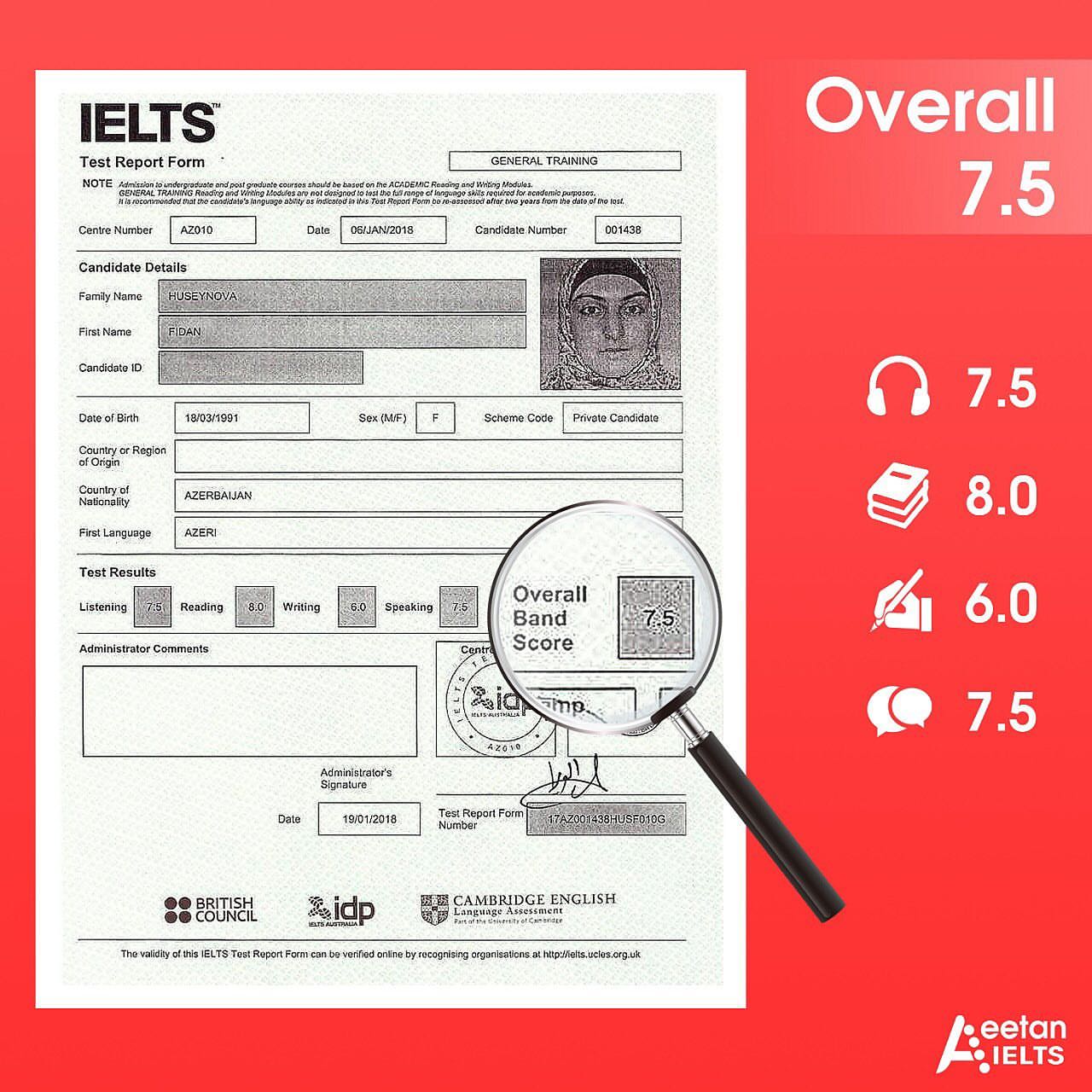
The IELTS is scored on a band scale of 0 to 9, with 9 being the highest. The general band score is the average of the four private section scores, rounded to the closest whole or half band.
- Band 9: Expert user
- Band 8: Very great user
- Band 7: Good user
- Band 6: Competent user
- Band 5: Modest user
- Band 4: Limited user
- Band 3: Extremely minimal user
- Band 2: Intermittent user
- Band 1: Non-user
- Band 0: Did not try the test
Each area has its own band descriptors, which outline the requirements for attaining a specific band score. Acquainting yourself with these descriptors can help you comprehend what is expected and focus your preparation accordingly.
Regularly Asked Questions (FAQs)
Q: How often is the IELTS test offered?
- A: The IELTS test is readily available up to 4 times a month, depending upon the test center. There are over 1,600 test centers in more than 140 nations.
Q: What is the difference in between IELTS Academic and General Training?
- A: The Academic variation is developed for individuals who want to study at a greater education level or look for professional registration in an English-speaking nation. The General Training variation is for those who desire to migrate to an English-speaking nation or participate in work experience or training programs.
Q: How long does it require to get IELTS outcomes?
- A: Results are usually offered within 13 calendar days of the test. Candidates can inspect their outcomes online and receive a Test Report Form (TRF) by mail.
Q: Can I retake the IELTS if I am not satisfied with my score?
- A: Yes, you can retake the IELTS as sometimes as you desire, however it is recommended to have a structured preparation plan before retaking the test to improve your score.
Q: Are there any specific accents used in the Listening area?
- A: The Listening section might consist of a variety of English accents, consisting of British, American, Australian, and New Zealand. This is to make sure that test takers can understand various accents in real-world circumstances.
Q: How can I enhance my Speaking score?
- A: To enhance your Speaking score, practice speaking with complete confidence and coherently. Use a large range of vocabulary and grammatical structures. Listen to model answers and record yourself to recognize areas for enhancement.
Q: Is it necessary to compose in a formal style for the Writing area?
- A: Yes, the Writing section, specifically Task 2, needs an official style. Use proper academic language and structure your essays clearly with an intro, body paragraphs, and a conclusion.
Q: What should I do if I am nervous before the Speaking test?
- A: Practice speaking in English with buddies or instructors to build your self-confidence. Usage relaxation techniques such as deep breathing and positive visualization. Keep in mind that the inspector exists to examine your language skills, not to critique you personally.
Tips for Success
-
Constant Practice
- Consistency is crucial to improvement. Set aside regular time each day for practice, concentrating on your weakest areas.
-
Use Authentic Materials
- Experiment genuine English products such as news articles, academic journals, and real-life conversations to better get ready for the test.
-
Join a Preparation Course
- Consider enrolling in an IELTS preparation course. These courses typically provide structured assistance, practice materials, and feedback from skilled trainers.
-
Find out from Mistakes
- Analyze your practice test results to identify common errors. Focus on fixing these mistakes in your future practice.
-
Stay Informed
- Keep yourself upgraded with any modifications in the IELTS format or scoring criteria. Authorities IELTS websites and resources are the finest places to discover precise and current details.
Getting ready for the IELTS is a multifaceted procedure that requires dedication, practice, and a strategic approach. By comprehending the test format, enhancing your language abilities, and using the right resources, you can increase your chances of accomplishing a high band score. Whether you are aiming to study, work, or move to an English-speaking country, the IELTS accreditation is a valuable property that can open doors to brand-new chances. With the right preparation and a favorable mindset, you can prosper in the IELTS and take a significant action forward in your individual and expert journey.
Extra Resources
- Official IELTS Website: ielts.org
- IELTS Practice Materials: ielts.org/practice-tests
- IELTS Preparation Courses: Check regional language schools or online platforms for recognized courses.
By following these pointers and resources, candidates can approach the IELTS with self-confidence and attain their preferred outcomes.
